No-code Server-Side Workflows to Sync Chatbot Leads with HubSpot, Shopify & WhatsApp
A practical guide to building reliable, secure no-code server-side workflows that sync chatbot leads to HubSpot, Shopify, and WhatsApp with ready-to-use webhook patterns and templates.
Download workflow templates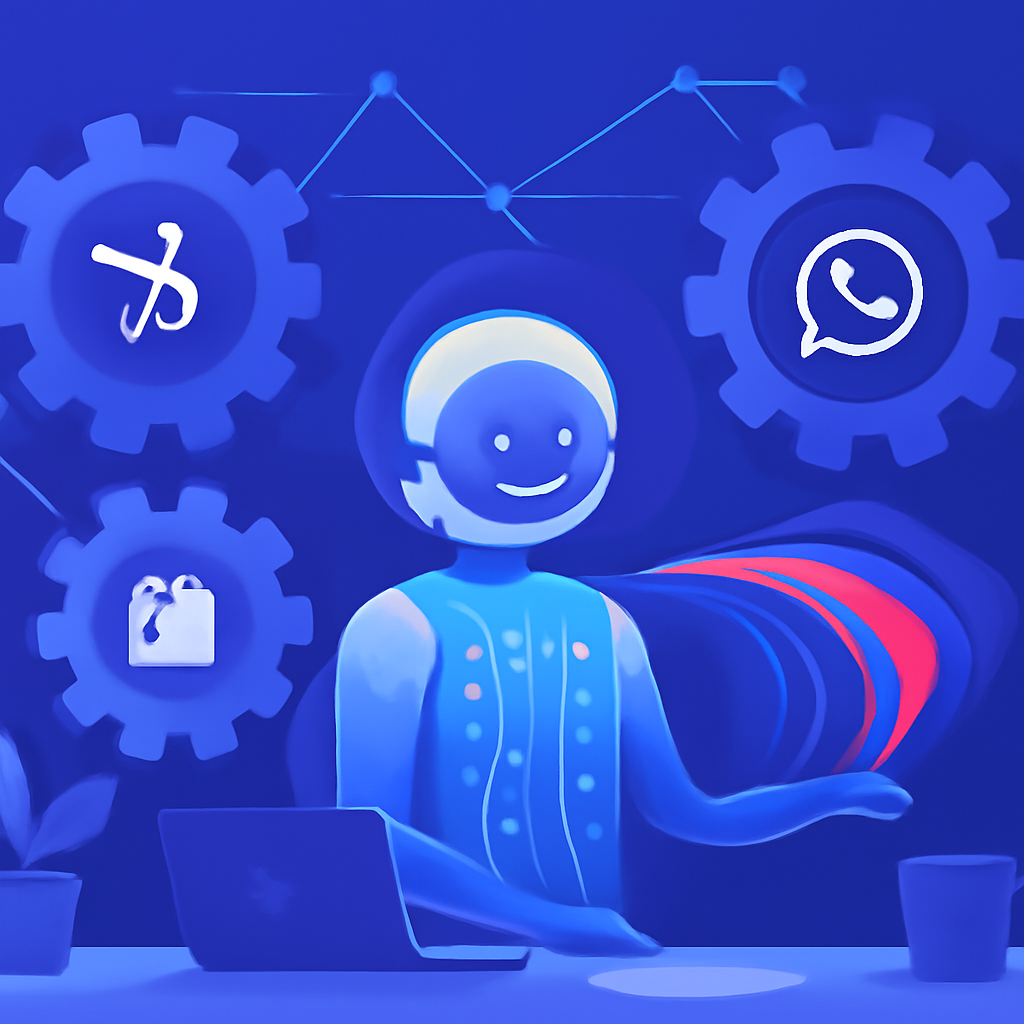
Why no-code server-side workflows matter for chatbot lead capture
No-code server-side workflows let teams route, enrich, and deliver chatbot leads to CRM and commerce platforms without writing backend services. When a chatbot captures contact details, qualifications, or purchase intent, handing that data off to HubSpot, Shopify, or WhatsApp reliably and securely matters for conversion and compliance. Server-side workflows move processing off the client and into a controlled environment, reducing data exposure, enabling retries, and centralizing transformations. For teams that lack engineering bandwidth, no-code workflow engines and ready webhook templates close the gap by offering an operational way to integrate with third-party APIs while preserving observability and governance.
Many SMBs and e-commerce merchants see the biggest ROI from faster lead routing and consistent qualification. Routing a lead to a sales queue within minutes instead of hours can materially change conversion outcomes, and automating cart rescue triggers from conversational flows improves recovery rates. These outcomes depend on predictable, low-friction integrations that do not break when a website snippet updates or when a browser blocks client-side requests. Server-side logic is where reliability, error handling, and audit trails live.
This guide focuses on practical patterns, security considerations, mapping examples, and ready-to-use webhook approaches for syncing leads from chatbots into HubSpot, Shopify, and WhatsApp. The recommendations work for marketing, customer support, and product teams that need to operationalize conversations as structured leads or events without building custom middleware from scratch.
Server-side webhooks versus client-side integrations: security, reliability, and compliance
Client-side integrations post data directly from the browser or widget to destination APIs. This approach can be fast to set up but it exposes API keys or relies on CORS policies and the end user’s network environment. Browsers and ad blockers can block requests, and you have limited control over retries and error handling. In contrast, server-side webhooks funnel events to a controlled endpoint where transformations, authentication, and queuing are handled centrally.
Server-side workflows improve security by keeping API credentials off the client and enabling signatures or token exchange patterns. They also help meet data residency and GDPR requirements by routing and storing only permitted fields, applying masking, and logging consent. From a reliability perspective, servers can queue failed requests, perform backoff, and add idempotency keys to avoid duplicate records on the destination.
Operationally, server-side setups make analytics and observability easier. You can store raw payloads, correlate attempts with business identifiers, and attach metadata such as campaign or agent IDs. For teams focused on scaling conversational lead capture, that observability reduces troubleshooting time and supports performance reporting for both marketing and support functions.
Step-by-step: Build a no-code server-side workflow to sync chatbot leads
- 1
Define the lead event and required fields
Start by mapping the conversational lead object you want to capture. Include primary contact fields (email, phone), intent tags (product interest, pricing request), and conversation metadata (session ID, entry page). Keep a canonical schema to avoid fragmented mappings across destinations.
- 2
Choose a no-code workflow engine or integration platform
Select a platform that supports server-side webhooks, retries, and transformations. Popular choices include integration platforms and built-in workflow modules provided by chatbot vendors. Confirm the platform supports authentication methods required by HubSpot, Shopify, or WhatsApp.
- 3
Create a secure webhook endpoint for your chatbot
Register a server-side endpoint that accepts POST payloads from your chatbot. Enforce an authentication token or signature to verify the source. Validate and sanitize incoming payloads before any transformation to prevent injection or malformed data.
- 4
Map and transform data for each destination
Use no-code mapping to convert the canonical lead schema into destination-specific formats. For HubSpot, map properties to contact and deal fields. For Shopify, map as draft orders or customer tags. For WhatsApp, format conversational notifications with templates when needed.
- 5
Add enrichment and qualification rules
Enrich leads with lookup rules or third-party data where appropriate. Apply qualification rules to route leads to the right pipeline or support queue. This reduces noise and ensures sales receives high-quality leads.
- 6
Configure retries, dead-letter handling, and observability
Set retry logic with exponential backoff for transient API errors. Send failed events to a dead-letter queue for manual review and log audit trails for compliance. Configure alerts for error spikes and include request/response logs for debugging.
- 7
Test end-to-end with sandbox APIs
Validate workflows using sandbox or test accounts for HubSpot and Shopify, and use Meta’s WhatsApp test numbers. Ensure idempotency and that duplicate events are handled gracefully during replays.
- 8
Deploy and iterate with monitoring
Roll out gradually, monitor delivery rates, and A/B test different qualification rules. Use analytics to measure impact on response time and conversion, then iterate the mapping and routing rules.
Data mapping patterns: HubSpot, Shopify, and WhatsApp lead models
Different targets expect different shapes, and mapping consistently is the single biggest source of integration friction. HubSpot stores contact and deal properties and benefits from small, normalized payloads containing standardized property names. Map chatbot fields like lead_source, interest, and lifecycle_stage explicitly, and use external_id or session_id to deduplicate incoming leads.
Shopify often expects customer objects, orders, or metafields. If a conversational flow indicates purchase intent, create a draft order or apply a customer tag and a cart token so the merchant can follow up. For abandoned cart workflows, include cart contents, last visited URL, and discount codes to enable targeted recovery. When sending conversational data to commerce platforms, avoid sending raw chat transcripts unless necessary for service, and instead send summarized insights and key attributes.
WhatsApp is a notification and conversational channel that does not store CRM records by itself. Use WhatsApp to send templated messages for appointment confirmations, cart nudges, or sales follow-ups. When sending messages programmatically via the Meta Business API, pre-approve templates and include only relevant attributes. For two-way conversations, persist the WhatsApp PSID or business_contact to map replies back to the canonical lead in your CRM.
Advantages of adopting no-code server-side workflows for lead sync
- ✓Improved security: Keeps API keys and tokens on the server, enabling signature validation and token rotation without exposing secrets to the browser.
- ✓Higher reliability: Server-side queues, retries, and idempotency reduce data loss and duplicates compared with direct client requests.
- ✓Faster iteration: Non-developers can update mappings and routing rules without an engineering release, shortening experimentation cycles.
- ✓Centralized observability: Logs and request traces live in one place, making it simpler to monitor delivery rates and debug failures.
- ✓Compliance and governance: Server logic can filter sensitive fields, log consent, and enforce region-based routing to satisfy privacy requirements.
Ready-to-use webhooks versus building custom middleware: which to choose
| Feature | WiseMind | Competitor |
|---|---|---|
| Development time | ✅ | ❌ |
| Maintenance burden | ✅ | ❌ |
| Customization | ❌ | ✅ |
| Security control | ❌ | ✅ |
| Scalability for SMBs | ✅ | ❌ |
Real-world example: implementing server-side webhooks with WiseMind templates
Once your server-side workflows and webhook endpoints are defined, you can plug them into conversational platforms that emit lead events. WiseMind provides prebuilt webhook templates and no-code routing for common destinations like HubSpot and Shopify, which accelerates implementation for marketing and support teams. Using those templates, teams typically map conversational qualification fields to HubSpot contact properties, create Shopify draft orders or customer tags for purchase-intent leads, and send WhatsApp notifications for high-value opportunities.
An example flow could look like this: a visitor asks about product availability, the chatbot collects name, email, and product SKU, the server-side workflow enriches SKU with product data from Shopify, and then the workflow creates or updates a HubSpot contact, attaches a deal with the SKU, and triggers a templated WhatsApp message to a sales agent. This pattern centralizes business rules and reduces the chance of inconsistent entries across systems. For teams that need prescriptive guidance, the Chatbot Lead Qualification Playbook: 12 High-Converting Conversation Flows + HubSpot Automation Recipes contains flow templates and mapping examples that pair well with webhook-driven syncs.
For analytics and continuous improvement, integrate delivery logs with your reporting. Link webhook event IDs to conversation analytics so you can measure which conversational prompts generate qualified leads and which paths need refinement. The Chatbot Analytics Playbook: KPIs, Dashboards, and Templates to Prove ROI for SMBs provides KPI suggestions and dashboards to track those outcomes. If you are deploying chatbots across storefronts, the AI Chatbot Integrations: The Complete Setup & Integration Guide for SMBs explains patterns for embedding and wiring webhook-based flows across web and mobile channels.
Monitoring, error handling, and privacy best practices for webhook workflows
Implement observability from day one. Log incoming payloads, transformation steps, and destination responses with timestamps and correlation IDs so you can trace a lead from chat to CRM. Set alerts for delivery failure thresholds and configure a dead-letter queue for manual intervention. Observability reduces MTTI and MTTR when an API contract changes or a destination is rate-limiting requests.
Design for idempotency and backoff. Add unique event IDs or external_ids, so retries do not create duplicates in HubSpot or Shopify. Use exponential backoff when hitting rate limits and expose retry metadata in logs so operators can distinguish transient errors from bad payloads. For WhatsApp templates, pre-approve message templates to avoid rejections and include fallback channels when templates are unavailable.
Comply with privacy rules. Filter or mask sensitive fields before sending to third parties, persist user consent and purpose, and provide simple ways to delete or anonymize personal data on request. If you integrate with platforms that store user data across regions, implement routing rules based on consent and region to respect local regulations. For platform-specific technical details refer to HubSpot, Shopify, and Meta developer docs: HubSpot Webhooks API, Shopify Webhooks and Admin API, and WhatsApp Business Platform documentation.
Next steps: starter checklist and where to find templates
Start with a small pilot that sends a single lead event type to one destination, then iterate. Use sandbox accounts for HubSpot and Shopify to validate mappings and message templates. Track these pilot metrics: delivery success rate, average time from chat to CRM record creation, and number of leads qualified per flow. Once stable, expand to additional lead types and destinations, and consider adding enrichment services or lead scoring rules.
WiseMind offers ready webhook templates and a guided implementation path to reduce setup time for chat-driven lead automation, which is helpful for teams that want a turnkey pattern for HubSpot, Shopify, and WhatsApp. Pair those templates with the flow guidance in the Conversational Lead Magnets: 7 High-Converting Chatbot Flow Templates for SMBs to accelerate experimentation and reduce the time between idea and measurable results. Agencies deploying across multiple clients will find centralized webhook templates particularly useful for repeatability and governance.
As you scale, combine your webhook logs with conversation analytics to identify where lead quality falls off. The WiseMind implementation guide: Deploy AI chatbots that convert and scale includes deployment and governance recommendations that align with the server-side webhook patterns described here. Finally, test regularly and keep templates up to date with API changes from HubSpot, Shopify, and WhatsApp to avoid integration drift.